The term Bharatanatyam today describes a particular style of dance. Factually, Bharatanatyam is a system of dance, described in the Natya Shastra, capable of manifesting various forms. Four related but distinct kinds conforming to the system of Bharatanatyam are:
Sadir Natyam – a solo dance type performed for centuries by devadasis in temples and eventually in the royal courts of South India, especially in Tamil Nadu.
Bhagavata Melam – a group form of dance drama from Tamil Nadu, with all roles performed by men, and themes based on folklore.
Kuravanji – a group dance by women, interpreting poetic compositions typically on the theme of fulfillment of the love of a girl for her beloved.
Kuchipudi – a group form of dance drama from Andhra Pradesh, with all roles performed by men, and themes based on folklore.
While a number of India’s dance types, like Manipuri, Mohini Attam, Yakshagana, and Kathakali, can be considered variations of the system of Bharatanatyam, they are not as firmly rooted in it as the four listed above.
The birth of this art form as well as the donning of these traditional costumes traces its ancestry way back to the 17th century, wherein Devadasis, who were temple dancers, practiced Bharatnatyam (Sadir Natyam) to worship gods and goddesses. In Southern India, a devadasi was a female artist who was dedicated to worship and serve a temple for the rest of her life. The adhesion took place in a Pottukattu ceremony that was somewhat similar to a marriage ceremony. In addition to taking care of the temple and performing rituals. After becoming Devadasis, the women would spend their time learning religious rites, rituals, dances, etc. They were expected to live a life of celibacy, however, there have been instances of exceptions. The absolute origin of the Devadasi tradition is unknown. The first known mention of a Devadasi is to a girl named Amrapali, who was declared nagarvadhu by the king during the period of the Buddha.
Devadasis wore heavy studded and embroidered saris and were depicted as celestial dancers who performed this classical art dance on earth.
Devadasi would perform the dance daily at the time of worship, and it came to be patronized by the Rajas and the princes. In the course of time, they began performing in the royal courts and thus its religious sanctity was lost.
This unique classical dance tradition deteriorated in the North due to repeated foreign invasions, and mixed dance forms replaced it. Luckily, the dance tradition survived in South India, where it continued to be patronized by kings and maintained by the devadasi system. However, under British rule, propaganda prevailed against Indian art, misrepresenting it as crude, unscrupulous, and inferior to the concepts of Western civilization. This influence was pervasive enough to dissuade the patronage of royal courts for ritual temple dances, and to transfer educated Indians from their traditions. The Madras Presidency under the British colonial government ruled out the custom of dancing in Hindu temples in 1910 and with this, the age-old tradition of this classical dance of South India was almost wiped out, even in Tamil Nadu.
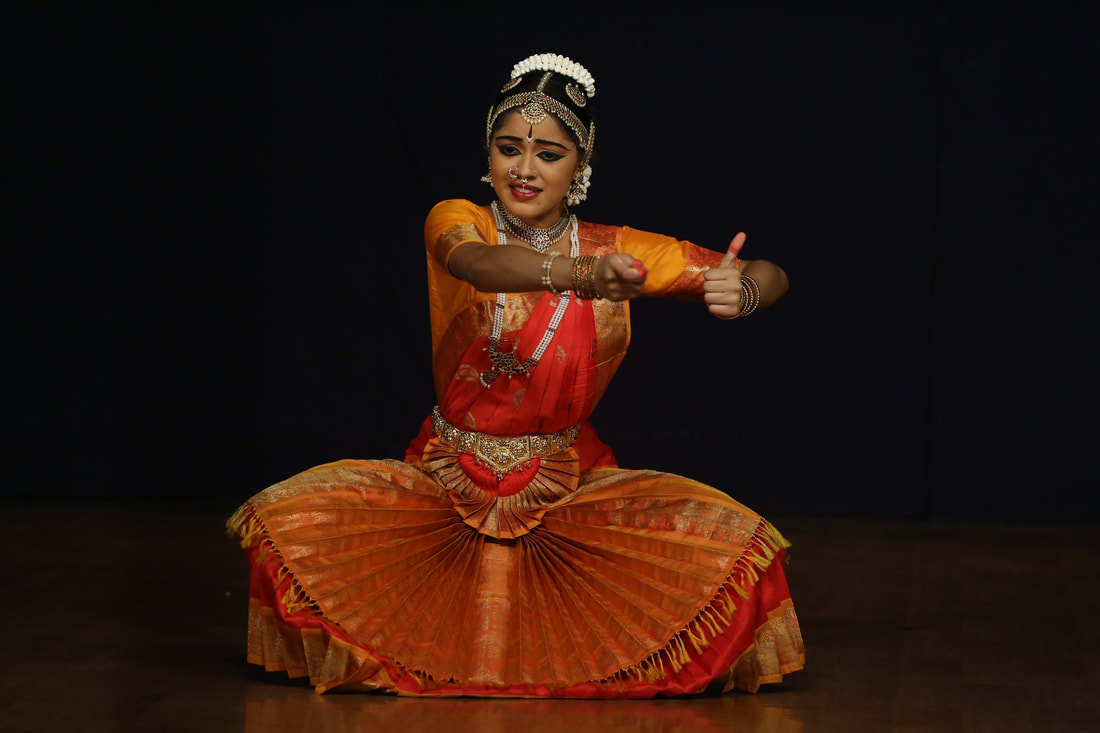
Against all odds, a few families preserved the knowledge of this dance form. Its revival consisted of individuals from disparate backgrounds: Indian freedom fighters, Westerners interested in Indian arts, people outside the devadasi class who learnt Bharatanatyam, and devadasis themselves.
During the early post-colonial years, India was dealing with its aftermath, poverty and strife and with the immediacy of industrial development, perhaps the national agenda didn’t see it significant to address the override of a community of women, allowing the complete dislodging of their identity. This allowed for a new class to emerge as the saviours of traditional art, renaming it, leaving behind the practitioners to fend with social neglect and the perils of improper implementation of a social and economic reform associated with the Prevention of Dedication act, by themselves.
Bharatanatyam now attracted young artists from respectable Brahmin background. Initially met with shock, their participation helped to shift public opinion in favor of reviving the art. Two such ladies were Kalanidhi Narayanan of Mylapore and Rukmini Devi of Adyar. Their works won over much of the orthodox community of Madras. Their reforms of costume, stage setting, musical accompaniment, and thematic content, won against the objections of conservatives that Bharatanatyam was vulgar. Rukmini Devi went on to found the Kalakshetra institute, to which she attracted many great masters and musicians, with whom she trained generations of dancers.

Over the years, this art form has evolved and transformed in its traditional pride, retaining the original essence of the culture.
Bharatnatyam dance has made dancing once again significant, so much so that it is now seen as an essential social accomplishment, and has also achieved international recognition as one of India’s treasures.

