Showing posts with label Indian jewelry. Show all posts

Monday, August 3, 2020

Transformation of Devadasi Dance to Modern Bharatanatyam Dance!

The term Bharatanatyam today describes a particular style of dance. Factually, Bharatanatyam is a system of dance, described in the Natya Shastra, capable of manifesting various forms. Four related but distinct kinds conforming to the system of Bharatanatyam are:

Sadir Natyam – a solo dance type performed for centuries by devadasis in temples and eventually in the royal courts of South India, especially in Tamil Nadu. 
Bhagavata Melam – a group form of dance drama from Tamil Nadu, with all roles performed by men, and themes based on folklore. 
Kuravanji – a group dance by women, interpreting poetic compositions typically on the theme of fulfillment of the love of a girl for her beloved. 
Kuchipudi – a group form of dance drama from Andhra Pradesh, with all roles performed by men, and themes based on folklore. 
While a number of India’s dance types, like Manipuri, Mohini Attam, Yakshagana, and Kathakali, can be considered variations of the system of Bharatanatyam, they are not as firmly rooted in it as the four listed above.

The birth of this art form as well as the donning of these traditional costumes traces its ancestry way back to the 17th century, wherein Devadasis, who were temple dancers, practiced Bharatnatyam (Sadir Natyam) to worship gods and goddesses. In Southern India, a devadasi was a female artist who was dedicated to worship and serve a temple for the rest of her life. The adhesion took place in a Pottukattu ceremony that was somewhat similar to a marriage ceremony. In addition to taking care of the temple and performing rituals. After becoming Devadasis, the women would spend their time learning religious rites, rituals, dances, etc. They were expected to live a life of celibacy, however, there have been instances of exceptions. The absolute origin of the Devadasi tradition is unknown. The first known mention of a Devadasi is to a girl named Amrapali, who was declared nagarvadhu by the king during the period of the Buddha.
Devadasis wore heavy studded and embroidered saris and were depicted as celestial dancers who performed this classical art dance on earth.

Devadasi would perform the dance daily at the time of worship, and it came to be patronized by the Rajas and the princes. In the course of time, they began performing in the royal courts and thus its religious sanctity was lost.

This unique classical dance tradition deteriorated in the North due to repeated foreign invasions, and mixed dance forms replaced it. Luckily, the dance tradition survived in South India, where it continued to be patronized by kings and maintained by the devadasi system. However, under British rule, propaganda prevailed against Indian art, misrepresenting it as crude, unscrupulous, and inferior to the concepts of Western civilization. This influence was pervasive enough to dissuade the patronage of royal courts for ritual temple dances, and to transfer educated Indians from their traditions. The Madras Presidency under the British colonial government ruled out the custom of dancing in Hindu temples in 1910 and with this, the age-old tradition of this classical dance of South India was almost wiped out, even in Tamil Nadu.
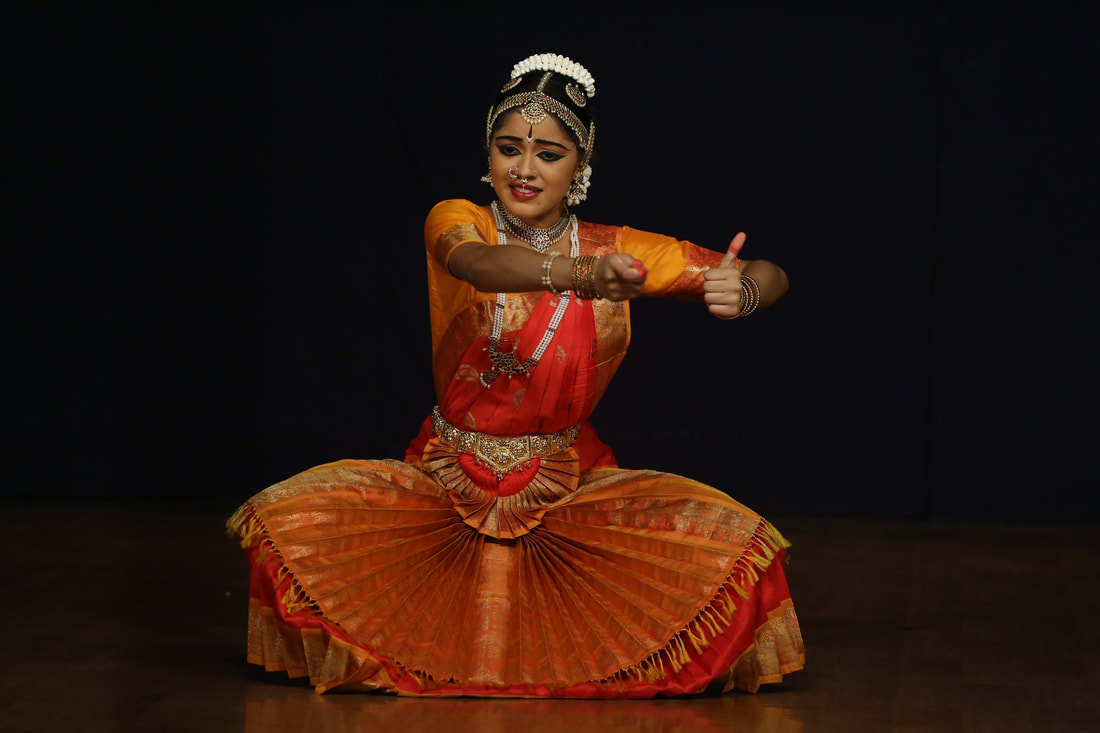
Against all odds, a few families preserved the knowledge of this dance form. Its revival consisted of individuals from disparate backgrounds: Indian freedom fighters, Westerners interested in Indian arts, people outside the devadasi class who learnt Bharatanatyam, and devadasis themselves. 
During the early post-colonial years, India was dealing with its aftermath, poverty and strife and with the immediacy of industrial development, perhaps the national agenda didn’t see it significant to address the override of a community of women, allowing the complete dislodging of their identity. This allowed for a new class to emerge as the saviours of traditional art, renaming it, leaving behind the practitioners to fend with social neglect and the perils of improper implementation of a social and economic reform associated with the Prevention of Dedication act, by themselves.
Bharatanatyam now attracted young artists from respectable Brahmin background. Initially met with shock, their participation helped to shift public opinion in favor of reviving the art. Two such ladies were Kalanidhi Narayanan of Mylapore and Rukmini Devi of Adyar. Their works won over much of the orthodox community of Madras. Their reforms of costume, stage setting, musical accompaniment, and thematic content, won against the objections of conservatives that Bharatanatyam was vulgar. Rukmini Devi went on to found the Kalakshetra institute, to which she attracted many great masters and musicians, with whom she trained generations of dancers.


Over the years, this art form has evolved and transformed in its traditional pride, retaining the original essence of the culture. 
Bharatnatyam dance has made dancing once again significant, so much so that it is now seen as an essential social accomplishment, and has also achieved international recognition as one of India’s treasures.

Tuesday, January 15, 2019

Temple Jewelry - How do Artisans make it?


Temple Jewelry Making 

Temple jewelry has been a part of south Indian tradition for centuries now. Ancient Tamil literature and its historical writings list many types of jewelry worn by idols, gods and goddesses. The art of jewelry making is known to have originated somewhere in the reign of Chola dynasty in the 9th century, and it was a celebrated form of art all the way through Pandya Dynasty and the Krishnadevaraya rule from the 9th century till the 16th century. This traditional jewelry or temple jewelry is made by using silver or gold as a base engraved and crafted to intricate designs with some precious stones embedded on them. The embedded stones may be dark green or dark reddish maroon in color.

Temple jewellery, an essential part of the adornment of the Tamil bride, is also an integral part of the aharya or costume of a Bharatanatyam or Kuchipudi dancer. Bharatanatyam is one of the classical dances in India which has its origin from religious rituals. Bharatanatyam is one of the oldest and most popular forms of classical in South India. Temple jewelry is important in the form of accessories to the costumes used in Bharatnatyam and Kuchipudi. The bharatnatyam dance jewelry sets are made with dark green & dark maroon –red, quality called kempu stones, also known as temple jewelry. The traditional temple kempu jewelry are the designs worn by Maharanis or Devadasis in the ancient times. Now days they have become fashionable to be worn for wedding, occasions and Indian dance forms like Bharatanatyam , and Kuchupudi. The stones are un-cut polished stones in red & green. Besides being a part of dance costumes and bridal adornment, the deities and idols are also heavily decorated with jewelry.
The temple jewelry is made precisely by hands of traditionally trained artisans. Vadaserry, a tiny village on the outskirts of Nagarcoil is famous of the crafting of traditional temple jewelry. About 60 jewelry making units are working with each of them having about 350 artisans, trained in a traditional way.
Dance Jewelry
Jewelry from www.JewelsAmore.com
The main steps involved in the making of the temple jewelry are:
·         A die of the required shape is made. It contains the engraving and minor detailing work that needs to be in the jewelry. These shapes and details may resemble the figures of deities, parrot, serpent, lotus, motifs, faces of gods and goddesses or any other of the sacred symbols.
·         A gold foil is mechanically worked on the die to give it the shape of the die, working takes place in cold conditions, and no excessive heating of the gold is required. Moreover a sheet of gold is used with relevant thickness.

·         After it has been shaped, the jewelry piece is embedded and embossed with the precious stones ‘kuchu kal’, the precious red or green stones.
·         Final step is giving it a nice surface finish, polishing and an antique finish.
There is a piece of jewelry all the way down from head to toe. Gold is auspicious and considered to be a symbol of health and prosperity. Jewelry pieces are made for forehead, nose, neck, abdomen (belly), upper arm, fore arm, wrist, finger of hands and feet, for ankles, waist, earlobes, etc, covering almost every part visible. Moreover different combinations of jewelry pieces can wear on different occasions, for instance ornaments used by a bharatnatyam dancer are as follows:
1.      Long Necklace
2.      Short Necklace
3.      Hip Chain (Waist Belt)
4.      Head Set (with the sun and moon)
5.       Earring set
6.      Hair to Earring Chain
7.      Hair Clip
8.       Nose Studs
9.       Bangles

As the time has passed by the affordability and accessibility of temple jewelry has changed, the design of jewelry itself has evolved and modified.  These days, silver metal is used as the base for the piece and is later plated with gold. The recreation of the antique gold jewelry has made it affordable for anyone who wants to feel like a part of traditions and cultures. The artisans of Vadaserry also export these pieces of ancient Indian heritage to America, Canada, London, Singapore and Malaysia. The crafting of the temple jewelry is more than just a way for employment and professionalism but also a way for the preservation of the art form for the next generations.


Friday, January 4, 2013

Kundan Jewelry Designs


Traditional Kundan Jewelry is one of the oldest form of gemstone jewelry in Indian. This type of jewelry uses a gem set with thin gold foil between the jewelry base mount and the gem stone. Usually the gem stone is placed in the mount and secured with gold foil between the gaps. Originated in Rajastan and Gujarat, Kundan jewelry is the most beautiful and loved jewelry in north India.


Jaipuri Jewelry is another form of Kundan jewelry in which the Kundan gemstone setting is in the front and enamel designs on the back of the jewellery bits. This is also called as Meenakari Kundan jewelry or Bikaneri Jewelry. Jaipur is the main source of Meenakari Kundan jewelry and Bikaneri Kundan Jewelry in India.

These are some of the designs of Kundan jewelry we have in our online store. Please have a look.

Kundan Jewlery

Monday, January 9, 2012

Importance of ankle bells in Indian classical dance


Indian classical dance is a varied form of art and has numerous styles to boast of. The different styles of dancing broadly pertain to the different geographic regions in the country. Each one of them proudly presents its own style, rhythm, grace and costume. Irrespective of these differences, most Indian classical dances have one thing in common – the "Ghungroo" or the ankle bells that are tied around the ankle of the Indian dancers.
The ghungroo is considered very special and are regarded with great respect by the Indian classical dancers. It is regarded as an inseparable part of the Indian classical dancing tradition for many forms of Indian classical dance such as the Bharatanatyam, Kathak, Kuchipudi, Mohiniyattam, etc.
Although, today the custom of wearing ankle bells has become prevalent in many dances such as the belly dance and most Indian classical dances; and is blindly followed as a tradition by many Indian classical dancers; there is a definite reason behind why this practice came into existence.
 The ghungroo or ankle bells are nothing but small metallic balls (usually made of brass) with a smaller metallic ball inside each one of them. They are strung together and tied to the ankle of a dancer. In modern days, for ease of use, these metallic balls are fixed on a leather or cloth strap that can be easily worn around the ankle of the dancer. Whenever the dancer moves his/her leg, the metallic balls in the ghungroo originate a sound that is in rhythm with the leg movements. 
Swift and graceful movements of different parts of the body such as the eyes, head, hands and feet in tune with the music is what constitutes a dance in most of the Indian classical dance forms. For an observer it is easy to decipher the movement of the eyes, head and hand while it might not be so easy to distinguish and appreciate the leg movements. Most of these dances tend to use complex leg movements that serve to highlight the dancing skills of the individual. However all this will just go unnoticed if there is nothing to accentuate these movements. And that is the exact purpose why the practice of using ankle bells while performing a dance came into being. 
Apart from emphasizing the complexity of the leg movements, the sound from the ankle bell also keeps the dancer in tune to the music and stay in rhythm, gives more life to the dancing and simply adds to the grandeur

Saturday, July 2, 2011

Sree Padmanabha Swamy Temple will be the richest Hindu Temple in the world

Sree Padmanabha Swamy Temple will the richest Hindu temple in the entire world !!! As of last week, while the stock taking was only 70% complete, the estimated value of thousands of precious stones, Gold necklaces, Gold deities and other valuable jewelry were about 11 billion US dollars.

Other items found today includes several Gold statues each weighing almost 5 pounds and Gold Jewelry necklaces as long as 3.5 meters and crowns decorated with Emeralds, Diamonds and Rubies. They also found a 4 feet tall statue of Lord Vishnu made of Gold.

It was identified by a special committee appointed by Supreme court that temple has a total of six chambers. With couple of chambers yet to be opened and the first chamber accounting ending Saturday (2 July 2011), it is expected that the inventory process may continue for a few more days.

The list of Jewelry and other valuables in the treasure found in Sree Padmanabhaswamy Temple are:

Hundred thousand Gold Coins, Precious Diamonds like Indraneelam, Belgium Diamonds, Emeralds, Rubies,
Thousand Sarappoli Gold Chains, Rare Priceless Gems, Gold Crowns like Kulashekharaperumal Crown,
Kashu Mala Necklaces, 400 Gold Necklaces with Marathakam stone, Gold Plates (Swarna Thalika), Gold Chains of about 18 ft, Golden Idol of Padmanabha Swamy, Gold Dhanuss, Gold Pathakams, 4 Feet tall Golden statue of Lord Vishnu with precious emeralds, Golden Umbrellas, Gold Pots, Kumbheeyam, Gold/Silver Nilavilakku, Other Kerala traditional Jewelry of various kind.

Hope all the wealth is used for good purpose / growth of the state and the polititians do not steal it as usual.